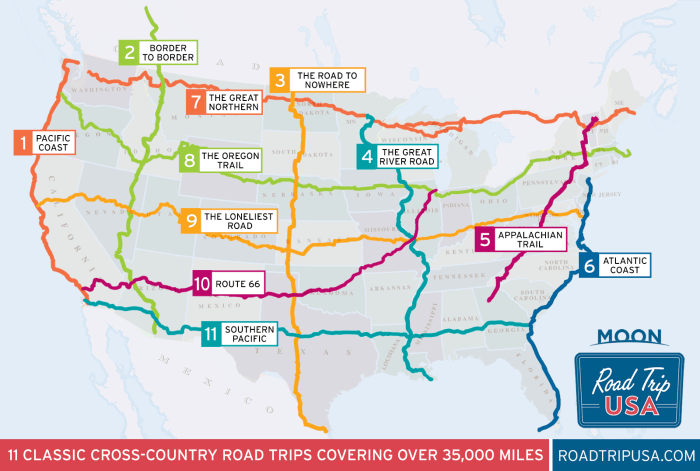
Embark on the ultimate American adventure with this comprehensive guide to road tripping across the USA. From meticulously planned routes showcasing diverse landscapes to budget-friendly tips and essential safety advice, we’ll equip you with everything you need for an unforgettable journey. Discover hidden gems, iconic landmarks, and the thrill of open-road exploration, all while navigating the practicalities of planning and executing your dream cross-country road trip.
This guide delves into every aspect of your trip, from initial route planning and budgeting considerations to finding unique accommodation and dining experiences along the way. We’ll cover essential safety measures, practical travel tips, and resources to help you make the most of your time on the road. Whether you’re a seasoned traveler or a first-time road-tripper, this guide will be your indispensable companion.
Accommodation and Food
Embarking on a cross-country road trip across the USA offers a diverse range of experiences, and a significant part of that involves securing comfortable accommodation and enjoying delicious meals along the way. The options are as varied as the landscapes you’ll traverse, from budget-friendly motels to luxurious resorts, and from classic roadside diners to upscale farm-to-table restaurants. Careful planning in these areas can significantly enhance your overall road trip experience.
Accommodation Options During a US Road Trip
The United States provides a wide array of accommodation choices to suit every budget and preference. Budget travelers might opt for motels, which are plentiful and offer basic amenities at affordable prices. These are particularly common along major highways. For those seeking a more comfortable stay, hotels and inns offer a wider range of amenities, including swimming pools, fitness centers, and on-site restaurants.
For a more unique experience, consider staying in vacation rentals like cabins, cottages, or even converted barns, which offer a more immersive and local experience. Hostels provide budget-friendly options for solo travelers or those on a tight budget, offering shared rooms and communal spaces. Finally, for a truly luxurious experience, consider boutique hotels or resorts, which offer personalized service and high-end amenities.
Recommended Roadside Diners and Local Restaurants
Finding great food is half the fun of a road trip. The culinary landscape of the US is incredibly diverse, reflecting the country’s rich history and varied cultures. In the South, you’ll find classic barbecue joints serving up mouthwatering ribs and pulled pork, like the legendary Rendezvous in Memphis, Tennessee, known for its dry-rub ribs. Heading West, you might stumble upon family-owned Mexican restaurants offering authentic tacos and enchiladas, perhaps in a small town along the California coast.
In the Northeast, clam chowder and lobster rolls are quintessential dishes, often served in charming seaside restaurants. The Midwest offers hearty comfort food, from Chicago-style deep-dish pizza to juicy burgers in countless roadside diners. Each region boasts its own unique culinary treasures, rewarding exploration and discovery.
Pre-booking Accommodation Versus Finding It on the Go
The decision of whether to pre-book accommodation or find it as you go depends largely on your travel style and the time of year. Pre-booking offers peace of mind, especially during peak season or if you’re traveling to popular destinations. It guarantees you a place to stay and can sometimes secure better rates, especially if you book in advance.
However, it limits your spontaneity and flexibility. Finding accommodation on the go allows for greater flexibility and the possibility of discovering hidden gems, but it also carries the risk of finding limited availability, particularly in smaller towns or during busy periods. Consider the trade-offs carefully when making your decision. For instance, a last-minute booking during a major holiday weekend could lead to higher prices and limited options, whereas booking a remote cabin months in advance offers security and potentially better pricing.
Finding Unique and Memorable Dining Experiences
To uncover truly unique dining experiences, venture beyond the well-trodden tourist paths. Look for local farmers’ markets to sample regional produce and artisanal goods. Seek out family-run restaurants and diners that are often found off the beaten track; these establishments often serve authentic local cuisine and offer a glimpse into the community’s culture. Check online reviews and local guides for recommendations on lesser-known eateries.
Engage with locals; they often have the best tips on where to find hidden culinary gems. For example, asking a gas station attendant or a local shopkeeper for their favorite diner or restaurant can lead to authentic and unforgettable dining experiences that might not be found in travel guides.
Activities and Attractions
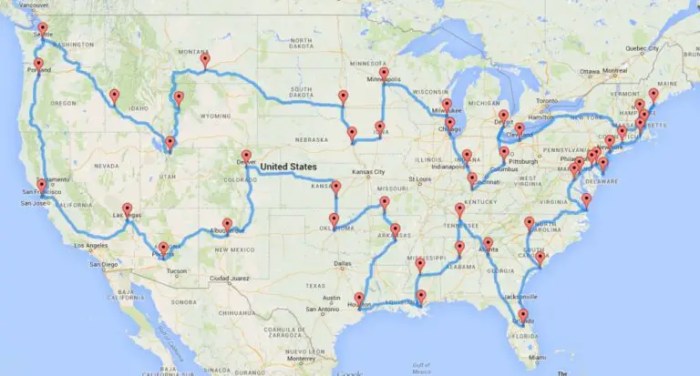
A road trip across the USA offers an unparalleled opportunity to experience the diverse landscapes, vibrant cities, and rich history of the nation. From breathtaking national parks to bustling metropolises, the possibilities for activities and attractions are virtually limitless. Careful planning will ensure you maximize your time and create unforgettable memories.
Must-See National Parks and Monuments
Choosing which national parks to visit can be overwhelming, given the sheer number of incredible options. This section highlights some of the most popular and iconic parks along common road trip routes, categorized for easier planning.
Western Route (e.g., California to Utah): Yellowstone National Park (geysers, hot springs, wildlife), Grand Teton National Park (mountain scenery, hiking), Yosemite National Park (giant sequoia trees, granite cliffs, waterfalls), Zion National Park (canyons, hiking), Bryce Canyon National Park (hoodoos, unique rock formations), Arches National Park (natural sandstone arches), Canyonlands National Park (vast canyons, mesas).
Southern Route (e.g., Texas to Florida): Big Bend National Park (desert landscapes, mountains, Rio Grande River), Carlsbad Caverns National Park (extensive cave system), Everglades National Park (unique ecosystem, alligators, birds).
Eastern Route (e.g., New York to Maine): Acadia National Park (coastal scenery, granite peaks, hiking), Great Smoky Mountains National Park (Appalachian Mountains, diverse plant and animal life).
Central Route (e.g., Chicago to Denver): Badlands National Park (eroded buttes and spires), Rocky Mountain National Park (alpine tundra, wildlife, hiking).
Outdoor Activities
Road trips are perfectly suited for a variety of outdoor activities. The open road provides access to stunning natural settings ideal for exploration and adventure.
Hiking: From easy nature walks to challenging climbs, hiking offers a chance to immerse yourself in the beauty of national parks and other natural areas. Many parks offer trails for all skill levels. Remember to check trail conditions and bring appropriate gear, including water, snacks, and sturdy footwear.
Camping: Camping allows for a deeper connection with nature. National parks and forests offer designated campgrounds with varying amenities, from basic tent sites to RV hookups. Reservations are often recommended, especially during peak season. Remember to practice Leave No Trace principles to minimize your environmental impact.
Kayaking/Canoeing: Explore waterways and enjoy a unique perspective on the landscape. Many rivers, lakes, and coastal areas offer opportunities for kayaking or canoeing. Rentals are readily available in many locations. Always wear a life jacket and be aware of weather conditions.
Major City Visits
Beyond the natural wonders, the USA boasts a collection of vibrant cities, each with its own unique character and attractions.
New York City: Explore iconic landmarks like Times Square, Central Park, the Statue of Liberty, and the Empire State Building. Enjoy Broadway shows, world-class museums, and diverse culinary experiences.
Los Angeles: Discover Hollywood, visit beaches like Santa Monica and Venice, explore museums like the Getty Center, and enjoy theme parks like Disneyland.
Chicago: Experience iconic architecture, visit Millennium Park and Cloud Gate (“The Bean”), explore Navy Pier, and enjoy the city’s vibrant food scene.
New Orleans: Immerse yourself in the city’s unique culture, explore the French Quarter, enjoy live music on Bourbon Street, and savor delicious Cajun and Creole cuisine.
National Park Comparison
The following table compares four popular national parks based on key features:
| National Park | Primary Features | Activities | Accessibility |
|---|---|---|---|
| Yellowstone | Geysers, hot springs, wildlife | Hiking, wildlife viewing, photography | Generally good, some areas require moderate fitness |
| Yosemite | Granite cliffs, waterfalls, giant sequoia trees | Hiking, rock climbing, photography | Ranges from easy to challenging, some areas require permits |
| Grand Canyon | Vast canyon, layered rock formations | Hiking, mule rides, rafting | Ranges from easy to strenuous, South Rim more accessible |
| Acadia | Coastal scenery, granite peaks | Hiking, biking, kayaking, scenic drives | Generally good, some trails are steep |
Transportation and Safety
Embarking on a cross-country road trip requires careful consideration of transportation and safety. The choice of vehicle significantly impacts the experience, while proactive safety measures are crucial for a smooth and enjoyable journey. This section details various vehicle options and essential safety practices to ensure a secure and memorable road trip across the USA.
Vehicle Options for a Road Trip
Choosing the right vehicle depends on your travel style, budget, and the number of passengers. Three primary options exist: cars, RVs, and motorcycles. Cars offer affordability and maneuverability, ideal for solo travelers or small groups prioritizing cost-effectiveness and fuel efficiency. RVs provide ample space and amenities, perfect for families or groups seeking comfort and self-sufficiency. Motorcycles, while offering freedom and fuel economy, require experience and careful consideration of weather conditions and luggage capacity.
Each option presents unique advantages and disadvantages.
Essential Safety Tips for Road Trips
Prioritizing safety is paramount for a successful road trip. This involves meticulous vehicle maintenance, comprehensive emergency preparedness, and adherence to safe driving practices. Regular vehicle checks, including tire pressure, oil levels, and fluid top-ups, are essential. Packing an emergency kit containing a first-aid kit, jumper cables, a flashlight, and extra water and non-perishable food is crucial. Staying alert while driving, avoiding distractions, and adhering to speed limits are fundamental for road safety.
Furthermore, informing someone of your itinerary and expected arrival times enhances safety.
Navigating Different Road Conditions and Weather Situations
Road conditions and weather across the USA vary significantly. Preparation for diverse driving scenarios is essential. This includes checking weather forecasts before departure and adjusting the itinerary accordingly. Familiarizing oneself with different road types, such as highways, mountain roads, and desert routes, and adjusting driving styles accordingly, is critical. Having appropriate gear for different weather conditions, such as snow chains for winter travel or sun protection for desert journeys, is crucial.
Knowing how to handle various road hazards, such as sudden rain or strong winds, is vital for a safe journey.
Obtaining Necessary Permits and Licenses for Driving Across State Lines
Driving across state lines requires adherence to specific regulations. A valid driver’s license from your home state is generally sufficient. However, certain states might have specific requirements for commercial vehicles or specific types of licenses. It’s advisable to check individual state regulations concerning driving permits and licenses before embarking on the journey. Ensuring your vehicle registration and insurance are up-to-date and valid in all states you plan to travel through is crucial.
Compliance with all traffic laws and regulations across different states is essential for a safe and legal road trip.
Travel Deals, Resources, and Essentials
Planning a cross-country road trip requires meticulous preparation, and leveraging available resources and deals is crucial for a smooth and budget-friendly journey. This section covers essential apps, travel insurance, packing lists, the benefits of using travel guides, effective deal identification, useful travel gadgets, and recommended travel guides for various regions of the USA.
Websites and Apps Offering Travel Deals and Discounts
Numerous online platforms and mobile applications provide significant savings on various travel aspects. Websites like Expedia, Kayak, and Priceline offer competitive flight and hotel deals, often bundling them for better value. Discount travel sites like Groupon and LivingSocial frequently feature deals on attractions and activities. For car rentals, consider using comparison websites like Kayak or directly booking with rental companies, checking for discounts with AAA or other membership organizations.
Mobile apps like Hopper and Skyscanner allow you to track price fluctuations and receive notifications on deals.
Essential Travel Apps for Navigation, Booking, and Communication
Having the right apps on your smartphone is indispensable for a seamless road trip. Navigation apps like Google Maps and Waze provide real-time traffic updates and alternative routes, significantly reducing travel time and potential delays. Booking apps such as Airbnb and Booking.com simplify accommodation searches and reservations. For communication, consider using apps like WhatsApp or Google Voice for international calls and messaging, especially if you’re planning on venturing into areas with limited cell service.
Importance of Travel Insurance and Coverage Options
Travel insurance is highly recommended for any road trip, offering financial protection against unforeseen circumstances. Comprehensive travel insurance policies typically cover medical emergencies, trip cancellations, lost luggage, and other unexpected events. Different levels of coverage exist, ranging from basic plans covering essential aspects to more extensive plans encompassing broader scenarios. For example, a basic plan might cover trip cancellations due to illness, while a comprehensive plan might include coverage for rental car damage or liability.
Essential Items to Pack for a Road Trip
Packing efficiently is crucial for a comfortable road trip. Consider categorizing your items for easy access and organization.
- Documents: Driver’s license, vehicle registration, insurance information, itinerary, emergency contacts, passport (if applicable).
- Electronics: Smartphone, charger, portable power bank, GPS device, camera.
- Clothing: Comfortable clothing suitable for various weather conditions, appropriate footwear, swimwear (if applicable).
- Toiletries: Toothbrush, toothpaste, sunscreen, insect repellent, medications.
- First-aid kit: Band-aids, antiseptic wipes, pain relievers, any personal medications.
- Car essentials: Jumper cables, flashlight, tire pressure gauge, basic toolkit, emergency flares.
- Other: Maps (physical or digital), snacks, water bottles, cooler bag.
Benefits of Using Travel Blogs and Guides for Planning a Road Trip
Travel blogs and guides offer invaluable insights and practical advice for planning your road trip. They provide detailed itineraries, recommendations for attractions and accommodations, tips for navigating specific regions, and often include firsthand experiences from other travelers. This information can help you refine your route, budget, and overall trip plan, making it more enjoyable and efficient.
Identifying and Utilizing Travel Deals Effectively
To maximize savings, be flexible with your travel dates. Mid-week travel and off-season trips often offer lower prices on flights and accommodations. Utilize price comparison websites to find the best deals and be prepared to book in advance, especially during peak seasons. Consider using travel rewards programs and credit cards that offer travel benefits. Look for package deals that combine flights, hotels, and car rentals.
Lastly, don’t be afraid to negotiate, especially with smaller hotels or rental car companies.
Features and Benefits of Various Travel Gadgets Useful for Road Trips
Several gadgets can enhance your road trip experience. A portable power bank ensures your electronics stay charged, while a dashcam provides a record of your journey and can be helpful in case of accidents. A GPS tracker can help locate your vehicle if it’s stolen or lost. Noise-canceling headphones can provide a peaceful environment for long drives.
A cooler bag helps keep your food and drinks fresh, and a hands-free device allows for safe communication while driving.
Recommended Travel Guides
Many excellent travel guides cater to different regions of the USA. For example, the “Lonely Planet” series offers comprehensive guides for various states and national parks, while AAA publishes regional guides focusing on road trips and attractions. Numerous digital resources, such as Roadtrippers and The Points Guy, provide interactive maps, suggested routes, and detailed information about points of interest.
Specific regional guides are available from various publishers, focusing on details like hiking trails, historical sites, or culinary experiences.
Planning a cross-country road trip across the USA is an ambitious but incredibly rewarding undertaking. This guide has provided a framework to help you navigate the planning process, from selecting your route and creating a budget to ensuring a safe and enjoyable journey. Remember that flexibility and adaptability are key; embrace the unexpected detours and spontaneous adventures that make road trips truly memorable.
So, pack your bags, hit the open road, and create lasting memories across the stunning landscapes of the United States.
Commonly Asked Questions
What’s the best time of year to road trip across the USA?
The best time depends on your preferred climate and destinations. Spring and fall generally offer pleasant weather in most regions, avoiding the extreme heat of summer and the cold of winter.
How much should I budget for gas on a cross-country road trip?
Gas costs vary greatly depending on the route, vehicle type, and current fuel prices. It’s advisable to factor in a substantial amount for gas, potentially hundreds of dollars, and to monitor fuel prices along your route.
What are some good apps for finding affordable accommodation?
Consider using apps like Booking.com, Expedia, and Airbnb to compare prices and find budget-friendly hotels, motels, and alternative accommodations like campgrounds.
What kind of vehicle is best for a long road trip?
The best vehicle depends on your budget and preferences. A fuel-efficient car is suitable for solo travelers or small groups, while an RV offers more space and amenities for larger groups or those who prefer more comfortable lodging.


